Introduction
If you run a small business, you’ve probably heard this advice a hundred times:
“You need SEO.”
But here’s the frustrating part — no one tells you where to start.
You might have:
- A website that looks good
- A few blog posts
- Maybe even some traffic
But you’re still not ranking where you should.
That’s where an SEO audit comes in.
And more importantly, that’s where choosing the right free SEO audit tool can make all the difference.
This guide is not going to overwhelm you with technical jargon. Instead, we’ll break things down simply:
- What an SEO audit tool actually does
- What small businesses should look for
- Why most tools fail beginners
- And what actually works in 2026
Why Small Businesses Need an SEO Audit Tool
Let’s be honest.
Most small business websites are not optimized.
Not because the owners don’t care — but because:
- SEO feels too technical
- Tools are confusing
- Agencies are expensive
So issues pile up quietly.
Things like:
- Missing meta descriptions
- Poor page structure
- Weak internal linking
- Content that doesn’t match search intent
Individually, these seem small.
But together?
They kill your chances of ranking.
An SEO audit tool helps you uncover these problems — fast.
What Makes a Good SEO Audit Tool?
Not all tools are created equal.
In fact, most tools are built for SEO experts, not business owners.
Here’s what a small business actually needs:
1. Simplicity
You shouldn’t need a tutorial just to understand your report.
If a tool gives you 50 metrics but no explanation — it’s not helping you.
2. Actionable Insights
Data is useless without direction.
A good tool should tell you:
- What’s wrong
- Why it matters
- What to fix first
3. Speed
You don’t want to wait 10 minutes for results.
Modern tools should give insights in seconds.
4. Prioritization
Not all issues are equal.
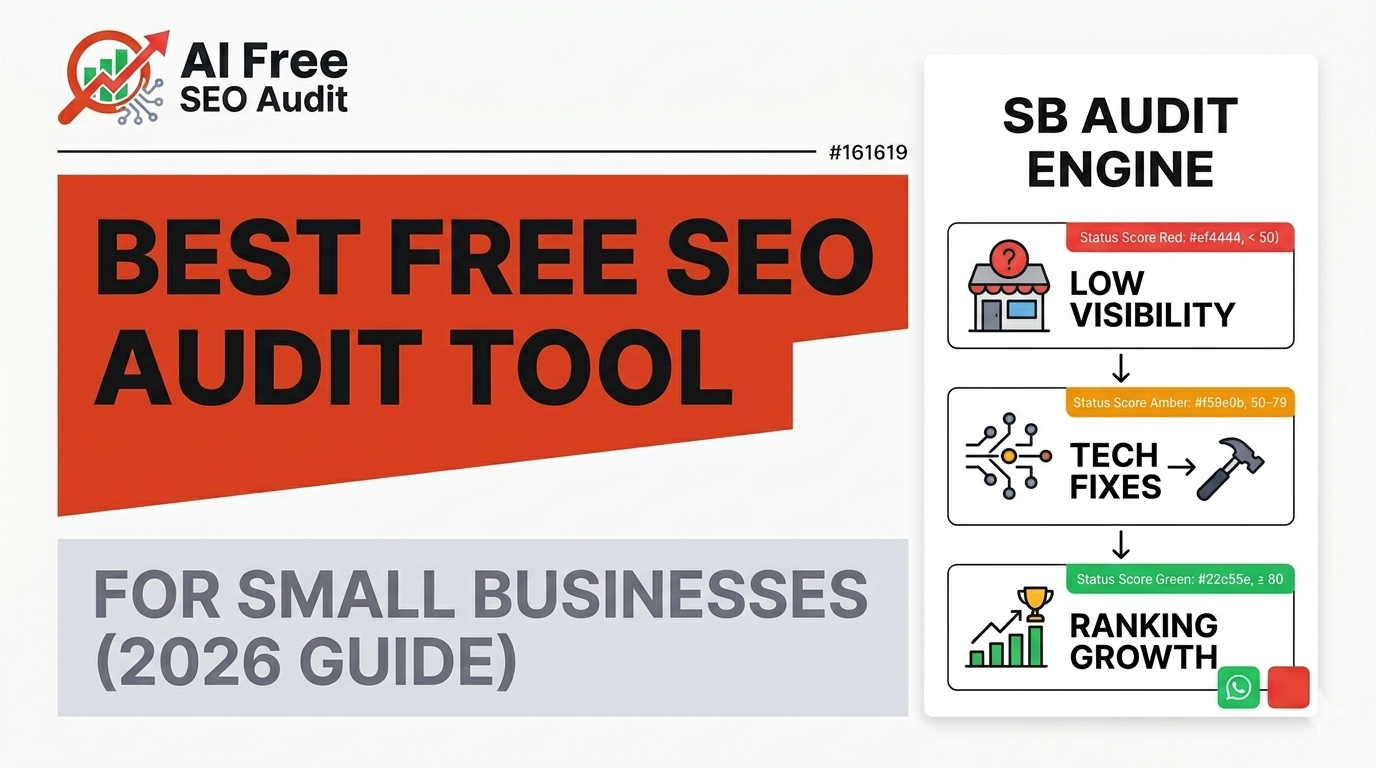
A strong audit tool highlights:
- Critical issues
- Medium issues
- Opportunities
The Problem with Traditional SEO Tools
Let’s talk about the tools most people recommend.
They’re powerful — no doubt.
But for small businesses?
They can be overwhelming.
Here’s why:
- Too many metrics
- Complex dashboards
- Expensive subscriptions
- Requires SEO knowledge
You end up spending more time trying to understand the tool than fixing your website.
The Rise of AI SEO Audit Tools
This is where things are changing.
AI-powered SEO tools are designed differently.
Instead of dumping raw data, they:
- Interpret the data
- Highlight what matters
- Suggest fixes
Think of it like this:
Traditional tools = data
AI tools = decisions
A Better Approach: Simple, Clear, Actionable
For small businesses, the best tool is not the most advanced one.
It’s the one that helps you:
- Understand your website
- Identify problems quickly
- Take action immediately
Example: What a Good Audit Should Show
A proper audit should answer:
- Why is my website not ranking?
- What issues are affecting SEO?
- Which pages need improvement?
- What should I fix first?
If a tool doesn’t answer these clearly — it’s not doing its job.
Why AI-Based Audit Tools Work Better
Modern AI tools simplify everything.
They:
- Scan your entire website
- Detect issues automatically
- Explain them in plain language
- Provide a roadmap to fix them
You can try a free SEO audit on your own website to see these insights in action.
Real Impact for Small Businesses
When small businesses fix SEO issues, they typically see:
- Better rankings
- Increased organic traffic
- More inquiries and leads
And the best part?
Most of these improvements come from fixing basics.
What Should You Do Next?
If you’re a small business owner, here’s a simple plan:
- Run a free SEO audit
- Identify critical issues
- Fix high-impact problems first
- Improve content and structure
- Monitor progress
Final Thoughts
You don’t need expensive tools to improve SEO.
You need:
- clarity
- direction
- consistency
The right audit tool gives you all three.
And once you have that?
SEO becomes much simpler than it looks.